

























Context Management: The Foundation for AI That Works in Production

Context management is the discipline of delivering trusted, governed context to AI agents at scale.

Getting it right is what separates AI that ships from AI that stalls. These resources cover the foundational concepts, architecture patterns, implementation guides, and comparisons you need to build it.

00:27

What is context management?

DataHub Co-Founder & CTO Explains

Watch Video

95%

of AI projects fail to reach production

MIT, State of AI in Business Report, 2025

40%+

of agentic AI projects will be cancelled by 2027

Gartner, 2025

91%

of orgs plan to build or buy a context platform within 12 months

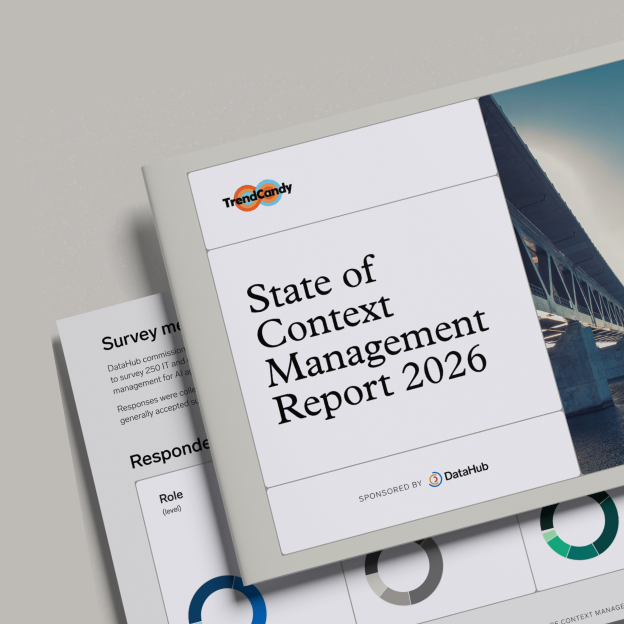
State of Context Management Report, 2026

Explore context management resources

What is context management?

Context management is the organization-wide capability to reliably deliver the most relevant data to AI context windows, enabling governed, enterprise-scale deployment of agents. Without it, AI agents hallucinate, return stale results, or fail entirely when moved from prototype to production. These resources define the category: from the foundational argument to the enterprise infrastructure that makes it real.

01

How is context management different from context engineering?

Context engineering gives individual teams tools to fill an agent’s context window. Context management gives the entire organization a shared, governed foundation that every agent can rely on. The distinction matters because context engineering doesn’t scale, and the gap shows up in production. These resources help you understand where one ends and the other begins.

Blog04.16.26
Context Engineering vs Context Management: Why Your AI Strategy Needs Both

Context engineering optimizes one agent. Context management scales trusted context across all of them. See how.

Blog03.09.26
The Data Engineer’s Guide to Context Engineering

Context engineering needs your data engineering skills. Learn how metadata, governance, and pipeline expertise translate to building context for AI agents.

02

What is a context window?

Every AI agent has a context window: the body of information it can process at one time. What goes in determines what comes out. For enterprise agents, a poorly filled context window is the most direct path to hallucination, inconsistency, and failed production deployments. These resources cover how context windows work and how to get the most out of them.

Blog04.13.26
What Is a Context Window? A Guide for Data and AI Practitioners

Learn what a context window is, how tokens work, why context limits matter for AI agents, and what it takes to manage context at scale.

Blog04.16.26
Context Window Optimization: Strategies, Trade-offs, and Why Context Quality Sets the Ceiling

Context window optimization techniques for AI agents, plus why upstream context quality determines the ceiling.

Who is this for?

Context management touches every team involved in building or using enterprise AI. The right starting point depends on your role.

Role

Start here

CDO / Head of Data

The business case and benchmark data to build organizational alignment.

Data Engineer

Data Analyst

What context management means for the work you do every day.

AI / ML Engineer

What reliable context delivery looks like from the model side.

Data Architect

The phased approach to building context infrastructure at scale.

How to build it

Context management is built incrementally. The teams that get it right start with a clear inventory of what they have, prove value with targeted pilots, and scale from there. These resources cover every stage of that journey.

02

How do you build a context layer that holds up in production?

Real data estates are messier than any architecture diagram suggests. These resources cover the implementation patterns and phased guides that hold up in practice for the teams building context infrastructure that has to survive contact with schemas that change, pipelines that break, and governance requirements that don’t bend.

Blog04.29.26
How to Implement an Enterprise Context Layer: A Phased Guide for Real Data Estates

A phased, practitioner’s guide to implementing an enterprise context layer on the metadata infrastructure you already have.

Blog05.14.26
AI Agent Onboarding: The Missing Discipline Behind Agents That Actually Work

AI agent onboarding is the missing discipline behind production-ready agents. Why context engineering can’t do the job alone.

What is a context platform?

A context platform is infrastructure that unifies structured metadata with unstructured organizational knowledge into a context graph, and delivers that context to humans and AI agents through portals, APIs, and MCP servers. It handles what a data catalog handles, plus the documentation, decision logs, and institutional knowledge that give metadata its meaning.

DataHub Context Management Platform

Claude Cursor Cortex Genie CrewAI LangChain Agent Development Kit
Ask DataHub
CONTEXT
ACTIVATION
MCP
Context Kit
APIs / SDKs
Skills
User Experience
CONTEXT
LAYER
Context Intelligence
Context Hub
Metrics
Lineage
Impact Analysis
Data Contracts
Data Quality
Access & Policy
CONTEXT
STORE
Metadata
Knowledge
Embeddings
Memory
Context Management Platform
INGEST REAL-TIME CONTEXT EVENTS
Microsoft Fabric Databricks Snowflake Dataplex
STRUCTURED DATA
usage schemas freshness
Slack Google Drive Notion Confluence
UNSTRUCTURED DATA
SOPs runbooks code
Salesforce Workday HubSpot
BUSINESS APPS
state changes entity definitions metric definitions
Power BI Model Context Protocol PDF
SEMANTIC KNOWLEDGE
semantic models ontologies

01

What’s the difference between a data catalog and a context platform?

A data catalog indexes structured metadata so humans can find and understand data assets. A context platform goes further — unifying that metadata with unstructured knowledge and delivering it to AI agents at runtime, with governance enforced at the point of delivery. These resources explain the gap and what it takes to close it.

Blog04.30.26
Context Platform vs. Data Catalog: What’s the Difference?

A direct comparison of what each tool does, where they overlap, and why the catalog alone isn’t sufficient for enterprise AI.

Blog04.28.26
What Is a Context Catalog? Why Data Catalogs Aren’t Enough for the AI Era

A context catalog makes metadata usable by AI agents and humans. Learn how it differs from a data catalog.

02

What is the context graph and how does it work?

The context graph is the connective layer at the heart of a context platform. It links data assets, business definitions, ownership, and lineage into a unified semantic network, giving agents the relationships and meaning they need to reason (not just retrieve). These resources explain how it works and why it’s the foundation for production-ready AI.

Blog04.29.26
Context Graph vs. Knowledge Graph: Same Shape, Different Scope

Context graphs and knowledge graphs share the same shape. The real difference is scope and grounding, and it matters more than the vocabulary.

Blog04.29.26
What Is a Metadata Knowledge Graph? A DataHub Definition

A metadata knowledge graph connects your data assets, pipelines, and meaning. Here’s what it is and why DataHub calls it a context graph.

Watch: context management in practice

From keynotes to hands-on demos, explore the concepts, architecture decisions, and real implementations that matter to teams building production AI.

Common comparisons

Context management doesn’t exist in isolation. These resources define the concepts around it and explain how each one fits into the broader picture.

MCP & integrations

There’s more than one way to connect your agents to trusted context. Context can reach your agents through the Model Context Protocol (MCP), native integrations, and SDKs. These resources cover some of the connection options available to get trusted context flowing to your agents.

Context management success stories from real data teams

Pinterest turned 400,000 ungoverned tables into its #1 AI agent

Pinterest built a context intelligence layer that indexes years of analyst query history as searchable business intent, powering an Analytics Agent that delivers trusted answers in minutes.


Netflix builds the governed context foundation for agentic AI

Netflix unified data, ML, and software assets across the company, enabling self-serve discovery, faster impact analysis, and the context infrastructure to power agentic AI at scale.

Nobody knows context management like DataHub

More teams build context management on DataHub than anywhere else — from open-source contributors to enterprise deployments across every major industry.

11.9K

GitHub stars

15K+

community members

3K+

Organizations

1.5K+

data and AI leaders at CONTEXT 2025

FAQs

What is context management in AI?

Context management is the organization-wide capability to reliably deliver the most relevant data to AI context windows, enabling governed, enterprise-scale deployment of agents. It covers how context is sourced, enriched, maintained, and delivered across every AI application in an organization — not just within individual pipelines or tools. Without it, agents operate on fragmented, stale, or ungoverned information, and production AI initiatives stall. Read our article Context Management is the Missing Piece in the Agentic AI Puzzle for a detailed overview.

What’s the difference between context management and context engineering?

Context engineering is the prompt-construction discipline that decides what goes into a model’s working memory on any given turn: what to retrieve, how to structure it, what to include or exclude. Context management is the upstream question of whether the context being engineered is trustworthy, governed, fresh, and semantically coherent in the first place. Both are necessary. Context engineering operates at the prompt layer. Context management operates at the infrastructure layer. Read our comparison guide Context Engineering vs. Context Management for more information.

What is a context window and why does it matter for AI agents?

A context window is the body of information a model can process in a single request. For enterprise AI agents, what fills that window determines the accuracy of every output. An agent working from stale documentation, ungoverned definitions, or incomplete lineage will produce confident wrong answers. Context management ensures the right information (meaning information that is relevant, reliable, and authorized) is available at query time. For a deeper dive, read What is a Context Window?

How does a context graph differ from a knowledge graph?

A knowledge graph maps facts and relationships between entities in a general, domain-agnostic way. A context graph maps those relationships specifically to an organization’s data assets, pipelines, AI agents, and governance policies. Knowledge graphs optimize for meaning and inference. Context graphs optimize for operational trust, connecting what data means to who owns it, where it came from, and whether it can be used. For more information on the differences and similarities between the two, read our comparison guide: Context Graph vs Knowledge Graph.

What is LLM grounding and how does context management enable it?

LLM grounding is the practice of anchoring a model’s outputs to verified, real-world data rather than relying on what the model learned during training. An ungrounded model generates responses from pattern-matching across its training corpus. These outputs are plausible, but not necessarily accurate or current. A grounded model generates responses by querying a trusted external source at runtime and citing what it finds.

Context management enables grounding at enterprise scale by ensuring the sources an agent queries are accurate, governed, and semantically coherent. DataHub’s context graph provides the grounding layer: certified datasets, end-to-end lineage, business definitions, and quality signals that agents can retrieve and reason over. Without context management, grounding degrades, resulting in agents that pull from whatever is available rather than whatever is trustworthy.

How does RAG relate to context management?

RAG (Retrieval-Augmented Generation) is a retrieval pattern that pulls relevant documents into a model’s context window at query time. Context management is the infrastructure that determines whether what gets retrieved is accurate, governed, and current. RAG operates at the application layer. Context management operates at the foundation. Without it, every RAG implementation is only as trustworthy as the data it retrieves from. For a deeper dive, check out our guide on RAG vs. Context Management.

What is MCP and how does DataHub use it for context delivery?

Model Context Protocol (MCP) is an open standard that lets AI agents request context from external systems at query time, rather than relying on hard-coded connections or bespoke retrieval pipelines. DataHub’s MCP server exposes the full context graph through this interface, returning metadata, lineage, ownership, and data quality signals to any MCP-compatible agent at runtime. The server sits behind an enterprise API gateway, creating a single control point for authentication, authorization, and audit logging. Agents get governed access to trusted context. Data teams get a complete record of what was accessed and when. Read our Practical Guide to MCP Context Management to learn more about how it works.

How does DataHub implement context management for enterprise AI?

DataHub ingests metadata from 100+ sources, including data warehouses, BI tools, ML platforms, dbt, and more, and builds a unified context graph connecting data assets to business definitions, ownership, lineage, quality signals, and institutional knowledge. That context is then delivered to AI agents at query time via the DataHub MCP server with governance policies enforced at the retrieval layer before context reaches the model.

What is the difference between secure agentic architecture and basic RAG?

Basic RAG retrieves documents and passes them to a model without governance, provenance, or access controls. It answers the question “what is relevant?” without asking “is this authorized?” or “can this be trusted?” Secure agentic architecture enforces fine-grained access controls at the retrieval layer (meaning before context reaches the model) and attaches provenance metadata to every piece of context delivered. If you need to audit what an agent used to reach a decision, basic RAG gives you nothing. A governed context layer gives you a complete trail.

Is DataHub’s context platform open source?

Yes. DataHub Core is fully open source under the Apache 2.0 license, with a community of 15,000+ active practitioners. DataHub Cloud adds managed infrastructure, advanced AI and governance features, and SLA-backed support for enterprise deployments. Organizations can start with Core and move to Cloud as their context management requirements scale. For more on the differences between them, visit DataHub Cloud vs. Core.