


10 Principles of Enterprise Context Platforms

A framework for evaluating whether your context platform is built for production-grade agentic AI
95% of AI projects fail to reach production, and Gartner predicts nearly half of agentic AI projects will be canceled by 2027. These aren’t model failures. They’re context failures: agents operating without accurate, governed, current information about the data they’re asked to reason over.
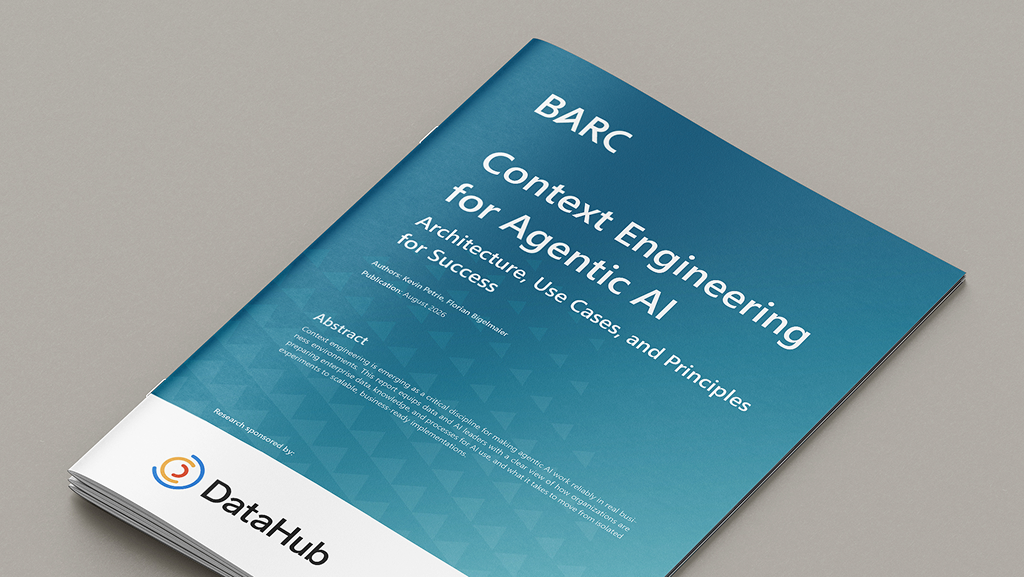
This guide lays out ten principles for evaluating whether a context platform can actually serve AI agents at production scale, from how broadly it ingests structured, unstructured, and semantic sources, to whether it activates context through more than a bare MCP connection, to whether it can reconstruct exactly what context an agent acted on. Along the way, it gives you a clear model for where context platforms fit in the broader AI reference architecture, and what that means for how you design your own stack.
What’s inside:
- Why 91% of organizations plan to build or buy a context platform in the next 12 months, and what separates context management from context engineering
- The 10 principles spanning ingestion breadth, semantic source-of-truth, expert validation, drift resolution, universal shareability, agentic-scale architecture, and auditability
- Why event-driven architecture, not batch refresh, is the baseline requirement for serving agents that query context continuously and at machine speed
- Why a timestamped, versioned context graph is the capability regulated buyers should weigh most heavily
Download the Guide
Get the full framework, including the detailed breakdown of all 10 principles, so you can implement a context platform for your organization.