



Build with DataHub: The Agent Hackathon is Open Now
We’re launching DataHub’s first agent-focused hackathon. Build with DataHub: The Agent Hackathon runs July 6 through August 10. Five weeks, $20,500 in prizes, four challenge categories.
DataHub has over 15,000 practitioners in our open-source community, and the questions we get most from builders right now are about agents: how to make them reliable, how to ground them in what’s actually in the data stack, how to get them into production. That’s what we built this hackathon around.
Why agents need context
There’s a specific failure mode that keeps coming up as teams ship AI agents into production. The agent writes a pipeline. It generates a query. It proposes a governance action. And then someone has to go fix it, because the agent didn’t know what was actually connected to what. It didn’t know who owned the dataset, or that the column had been deprecated, or that three downstream models depended on it.
The agent had capability. It didn’t have context.
That’s the problem DataHub is built to solve. DataHub connects schemas, lineage, ownership, governance policies, data quality signals, and ML metadata into a single queryable graph across your entire stack. Over 3,000 organizations run it. It’s fully open source, with 100+ connectors into the modern data and AI stack.
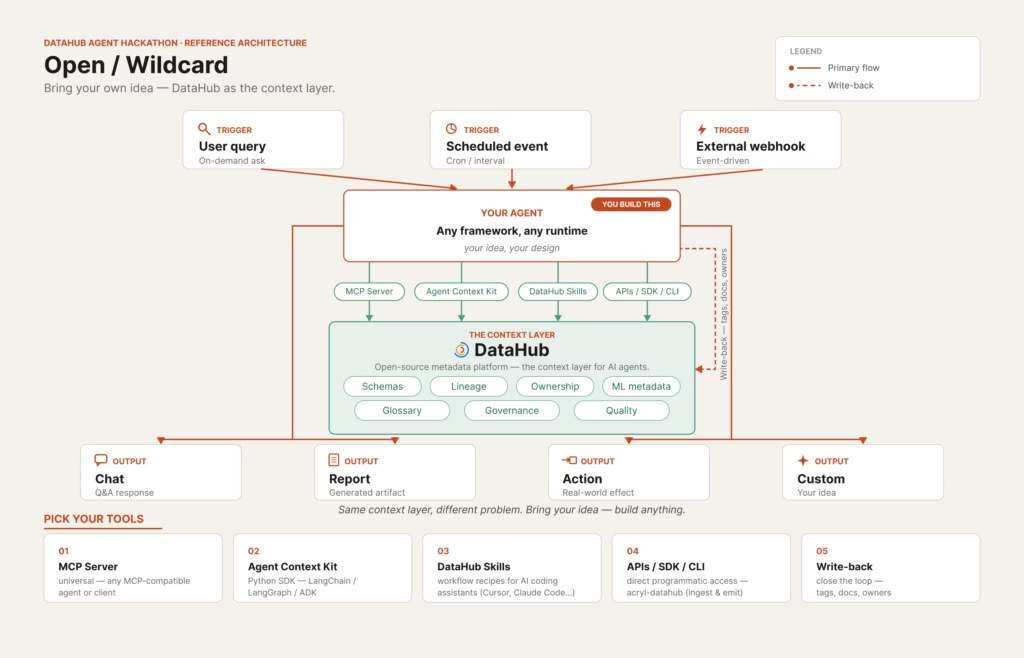
The MCP Server and Agent Context Kit give agents structured access to that graph at runtime, with native integrations for LangChain, LangGraph,Google ADK, and any MCP-compatible client. That’s what makes context-grounded agents possible.
This hackathon is about what builders do with that foundation.
At DataHub, we define context management as an organization-wide capability to reliably deliver the most relevant data to AI context windows, enabling the governed and enterprise scale deployment of agents
The four challenge categories
Agents that do real work
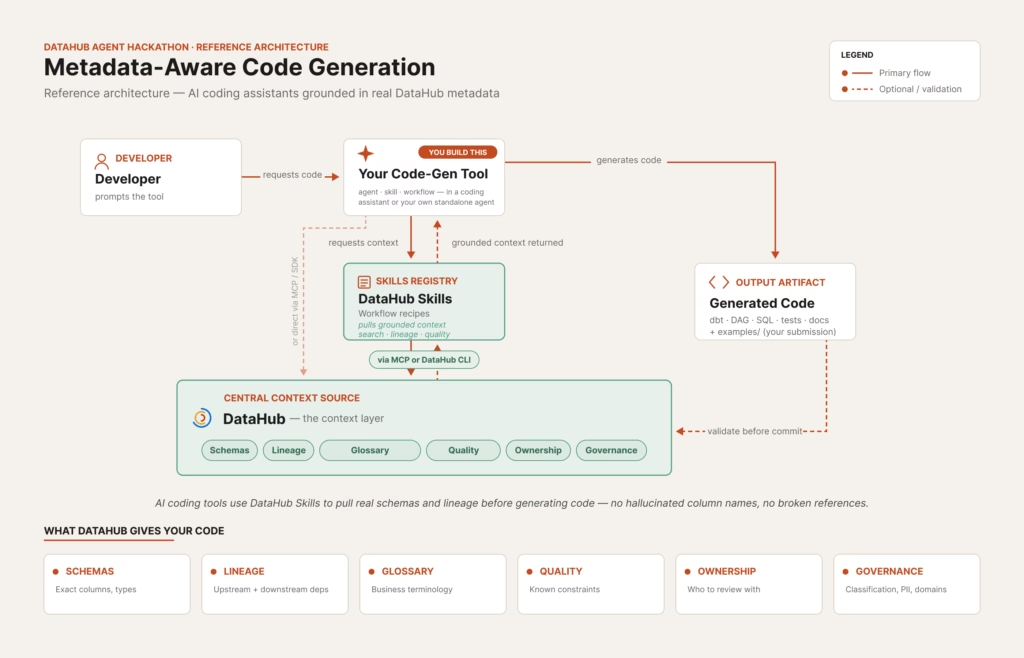
Build agents that handle data problems on their own. The agent should read DataHub to understand what’s connected to what, take action, and write results back so the next person or agent inherits the context. Whether it be a dropped column, a governance flag, or a cascading impact across pipelines and dashboards, build the agent that handles it.
Metadata-aware code generation and development
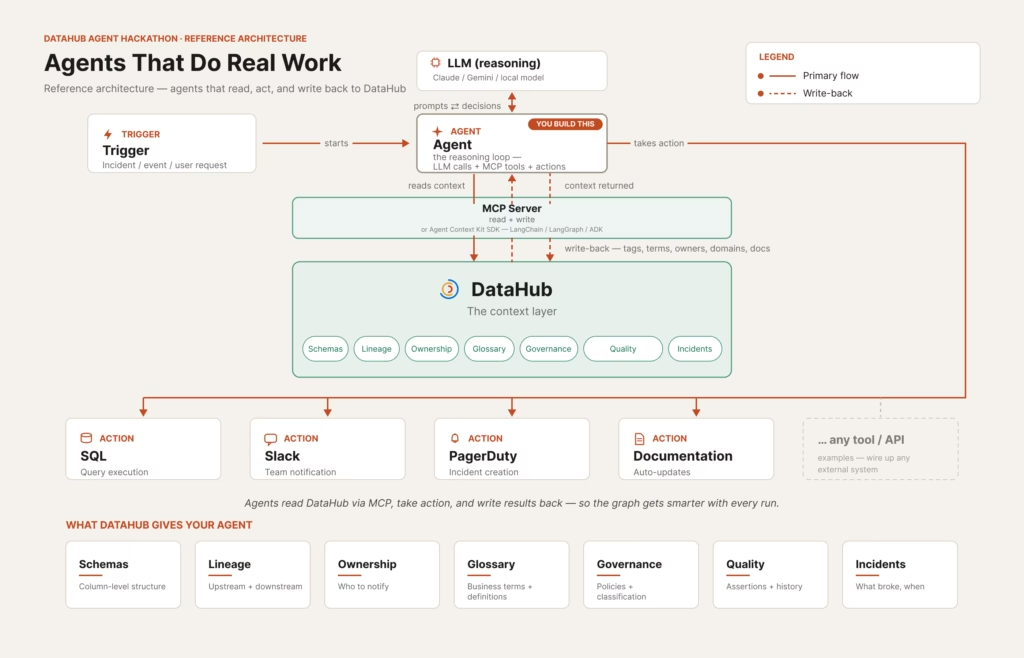
Build agents that generate production data code — transformation models, pipeline DAGs, ingestion scripts — that work on the first try because they read DataHub for real schemas, lineage, and rules before generating anything. The artifact should be something your data team would actually merge. Strong submissions include sample generated outputs in an examples/ folder so judges can evaluate quality without running the project themselves.
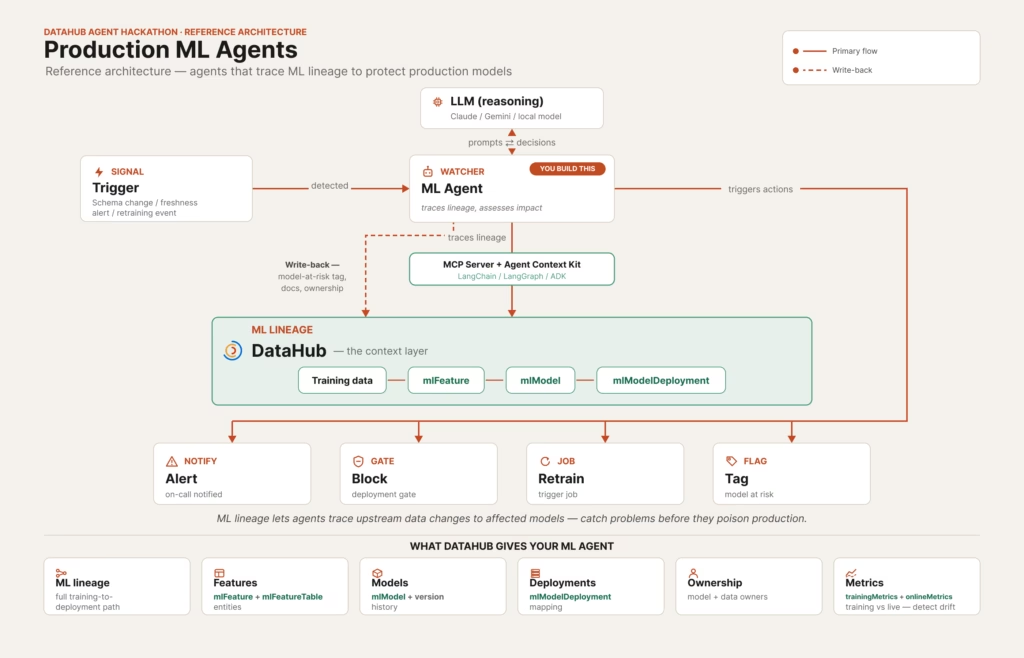
Production ML agents
Build agents that protect ML models in production. DataHub tracks the full path from training data to features to models to deployments. Build agents that use that lineage to catch silent problems, like target leakage, upstream data changes that should have triggered a retrain, or schema drift affecting model quality — the kind of failures that are obvious in retrospect and expensive in the meantime.
Open / wildcard
If your idea doesn’t fit the categories above, build it anyway. Supply chain, financial forecasting, regulatory automation, knowledge capture. The best submissions sometimes don’t fit neatly anywhere.
Prizes
| Award | Prize |
|---|---|
| Grand prize (1) | $6,000 + presentation at DataHub Town Hall + community promotion |
| Challenge winners (4, one per category) | $3,000 + community promotion |
| Honorable mentions (2) | $1,000 |
| Feedback survey prize (10) | $50 each |
Grand Prize and Challenge Winners also get social media promotion across DataHub’s Slack community and a LinkedIn badge. And the Grand Prize winner presents at DataHub Town Hall to a real audience of practitioners who will actually use what you built.
How to get started
Spin up DataHub locally with the DataHub Quickstart Guide, it takes just a few minutes.
pip install acryl-datahub
datahub docker quickstart
From there:
- The DataHub MCP Server and Agent Context Kit give your agent structured access to the context graph
- Sample datasets are available to build and test against without needing to connect to a live stack
- The DataHub Skills Registry has workflow recipes built for AI coding tools, including Cursor, Claude Code, Copilot, Codex, and Gemini CLI. Install all skills with one command:
npx skills add datahub-project/datahub-skills If you’re thinking about building for the code generation category, the DataHub Analytics Agent is open source and worth reading. It handles text-to-SQL with full DataHub context and is a useful reference for how to ground LLM-generated code in metadata.
We’ll be in DataHub Community Slack throughout the hackathon. Head to #agent-hackathon to ask questions, share what you’re building, connect with other builders, and get help from the DataHub team.
Important dates
| Milestone | Date |
|---|---|
| Submissions open | July 6, 2026 |
| Submissions close | Aug 10, 2026 |
| Judging window | Aug 17 – Aug 31, 2026 |
| Winners announced | Sept 8, 2026 |
Build something worth keeping
The judging criteria rewards depth of DataHub usage, technical execution, real-world usefulness, and submission quality. Judges will also look favorably on open-source contributions to the project, such as new connectors, skills, RFCs, and documentation improvements, whether built during the hackathon or extended from prior work.
Five weeks is a real window to ship something meaningful. Register, pick a challenge, and let’s see what you make.
Full rules and eligibility at datahub.devpost.com.
Happy building!